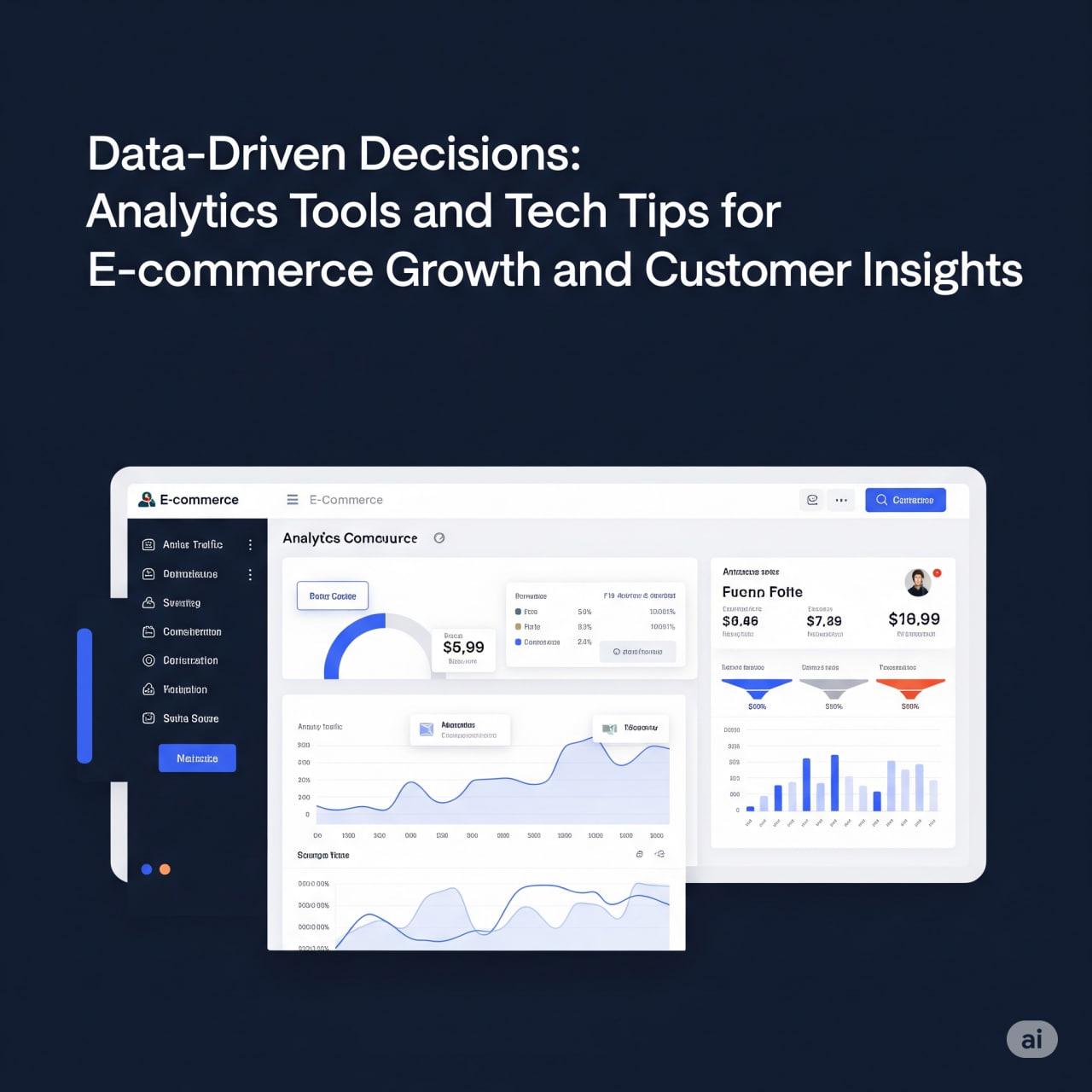
here’s a breakdown of analytics tools and tech tips to boost your e-commerce growth and customer insights in 2025:
I. Analytics Tools for E-commerce Growth
Here’s a look at some of the top analytics tools you can leverage:
- General E-commerce Analytics Platforms:
- Google Analytics: A widely used, free tool that offers a range of features for understanding user behavior and website performance. It also has Enhanced Ecommerce for detailed sales funnel tracking.
- Adobe Analytics: A comprehensive platform for measuring and optimizing customer interactions across various channels.
- Kissmetrics: Focuses on individual customer behavior, providing insights for marketing optimization.
- Woopra: Helps optimize every stage of the customer journey.
- Matomo: A privacy-focused, self-hosted analytics platform.
- AI-Powered Analytics and Personalization:
- Nosto: Creates personalized shopping experiences with tailored product recommendations and content.
- Dynamic Yield: Uses AI to personalize content, offers, and optimize website layouts in real-time.
- Platforms Focused on Profitability and Growth:
- Conjura: Focuses on profitability, providing insights into product, customer, and channel performance.
- Triple Whale: Consolidates data from various marketing platforms, offering AI tools for ad optimization.
- Customer Journey and Behavior Analysis:
- Hotjar: Provides heatmaps and user session recordings to understand user behavior on your site.
- Crazy Egg: Offers heatmaps and scroll maps to visualize user interaction.
- Mixpanel: Delivers real-time event analytics and customizable dashboards to monitor user interactions.
- Amplitude: Helps visualize customer journeys and segment users by behavior.
- Mitzu: A customer journey analytics platform tailored for high-volume e-commerce data.
- Marketing and Reporting:
- Glew.io: Provides personalized recommendations to increase sales and optimize ad spending.
- Supermetrics: Imports e-commerce data and displays it in customizable reports.
- Semrush: Offers SEO, content marketing, and competitor analysis tools.
- doola Analytics: Unifies financial, customer, and product insights in one dashboard.
- Warehouse-Native Analytics:
- NetSpring (Optimizely Analytics): Connects directly to your cloud data warehouse for scalable, real-time analytics.
- Polar Analytics: Gives users direct access to raw data through Snowflake.
- Other Tools:
- Optimizely: A/B testing and experimentation tools.
- HubSpot: Website performance and customer interaction monitoring.
- Omnisend: Email marketing platform with automation and features.
- Metrilo: Real-time dashboard focused on online store performance.
- Pendo: Combines product analytics with in-app messaging.
II. Tech Tips for E-commerce Customer Insights
Here are some key strategies and technologies to enhance your customer insights:
- AI-Powered Personalization:
- Use AI to analyze customer data (browsing behavior, purchase history) and provide tailored product recommendations, emails, and website layouts.
- Omnichannel Marketing:
- Integrate your online and offline presence to create a seamless customer experience.
- AI-Powered Customer Service: * Implement AI-driven tools like chatbots and virtual assistants to provide instant support and personalized recommendations.
- Augmented Reality (AR) and Virtual Reality (VR):
- Use AR/VR to allow customers to virtually “try on” products or visualize them in their space.
- Voice Search Optimization:
- Optimize your website for voice search by using natural language keywords and long-tail phrases.
- Mobile Optimization:
- Ensure your website is mobile-friendly with fast loading speeds and intuitive navigation.
- Data-Driven Decision Making:
- Use analytics tools to understand customer behavior, identify trends, and optimize your marketing strategies.
- Customer Segmentation:
- Divide customers into groups based on demographics, purchase history, or browsing behavior to tailor your marketing efforts.
- Dynamic Pricing:
- Adjust prices based on customer demand, competitor pricing, and other factors.
- Predictive Analytics:
- Use predictive models to forecast demand patterns, optimize inventory, and personalize customer experiences.
- Marketing Automation:
- Automate tasks like email marketing, social media posting, and customer service to improve efficiency.
- Social Commerce:
- Utilize social media platforms to promote products and enable direct purchases.
- First-Party Data:
- Focus on collecting and utilizing first-party data (email lists, purchase history) for more effective retargeting.
- Data Security and Privacy:
- Implement robust security measures to protect customer data and build trust.
Leave a Reply